
USA Case Study: Repeat Order of an SW-D200 Candy Pouch Machine and a Small Powder Sachet Machine
Case Facts
| Country | United States |
| Customer | E-commerce brand, second order with us |
| Products | Candy, about 30 pieces per pouch; powder, 3–60 g per sachet |
| Machines | SW-D200 with weigher, Z elevator and platform; a small vertical powder packing machine |
| Power | 60 Hz; three-phase for the SW-D200, 220 V single phase for the small machine |
| Status | Delivered; small machine connected on 3 October 2026 |
A Second Order After a Candy Machine
The customer is an e-commerce brand in the United States. Its first machine from us packed candy and shipped in one wooden case. By late May 2026 both new machines were in production.
What They Needed to Pack
For candy, the customer asked for the smallest pouch that holds 30 pieces, and set it at 6 inches wide and 8 inches long. For powder, it needed sachets from 3 g to 60 g.
The Machines

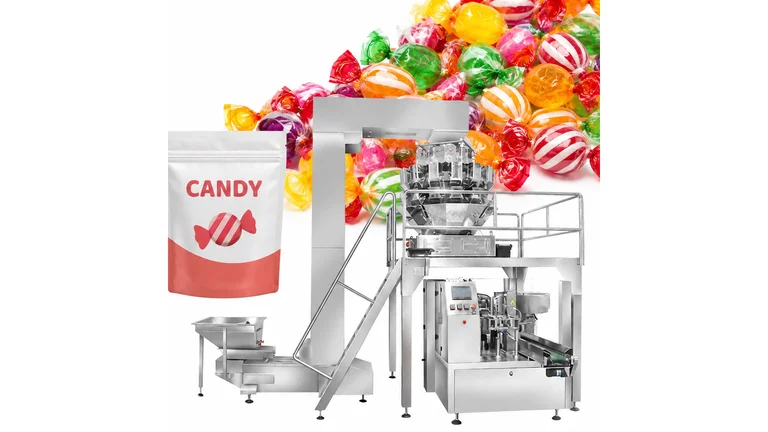
Premade Bag Granule Packing Machine
An 8-station rotary machine for granule products such as candy in premade pouches, fed by a multi-head combination weigher.
On this order the SW-D200 has a combination weigher, a Z elevator and a platform, on three-phase power. During production we added a poking function to its filling nozzle.
The second machine is a small vertical powder packing machine with a small central screw for 3–60 g, on 220 V single phase, 60 Hz.
Rated Speed and Bag Range
On the SW-D200 series page the rated speed is 16–50 bags/min (machine specification; not measured on this order). The SW-D200 takes bags 80–200 mm wide and 100–350 mm long, which covers the 6 × 8 in candy pouch.
How the SW-D200 Handles Candy Pouches on 60 Hz Power
Candy reaches the weigher by lift rather than by hand. The Z elevator carries it in buckets from floor level to the top of the combination weigher on its platform. Its enclosed design keeps pieces from spilling or scattering on the way up.
Weigher and pouch machine run as a pair rather than on separate clocks. In the usual arrangement the pouch machine signals when an open pouch is ready, and only then does the weigher release the portion it has selected. The weigher's discharge is synchronised with the packaging machine. Without that handshake, candy would fall onto an empty station or a pouch would travel on unfilled.
Supply frequency matters to both machines in this order. An AC motor's speed follows the frequency of its supply. A motor set up for 50 Hz therefore turns faster on 60 Hz, roughly in the ratio of the two frequencies. Where a variable-frequency drive controls a motor, its speed reference has to be reset so that the voltage-to-frequency ratio stays correct. Voltage and power ratings shift with frequency too. That is why the site frequency is confirmed before the machines are built rather than after they arrive.
How the Project Ran
On 25 May 2026 the customer confirmed that power at its site is mostly 60 Hz. Part of the order had been set up for 50 Hz, so we changed it, which delayed the build a little. On 12 June 2026 we added the poking function. When we offered to show any part of the machines in more detail, the customer replied: “If you are satisfied then I am satisfied”.
| 11 July 2026 | Revised PI: door-to-door transport as on the first order, five wooden cases |
| 14 July 2026 | Balance paid |
| 17 July 2026 | Machines at the forwarder |
| 22 July 2026 | In Chinese export customs |
| 30 July 2026 | Typhoon delay reported; sailing planned for 4 August 2026 |
| 14 August 2026 | Ship sailed; ETA 14 September 2026 |
| 22 September 2026 | Cases opened at the customer's site |
| 3 October 2026 | Small machine connected |
After Delivery: Installation Support
Once the cases were open, the customer asked for assembly videos, wiring and an operating guide. The questions fell into three groups.
Parts. Some screws seemed to be missing; the customer found the Z elevator bolts later that day.
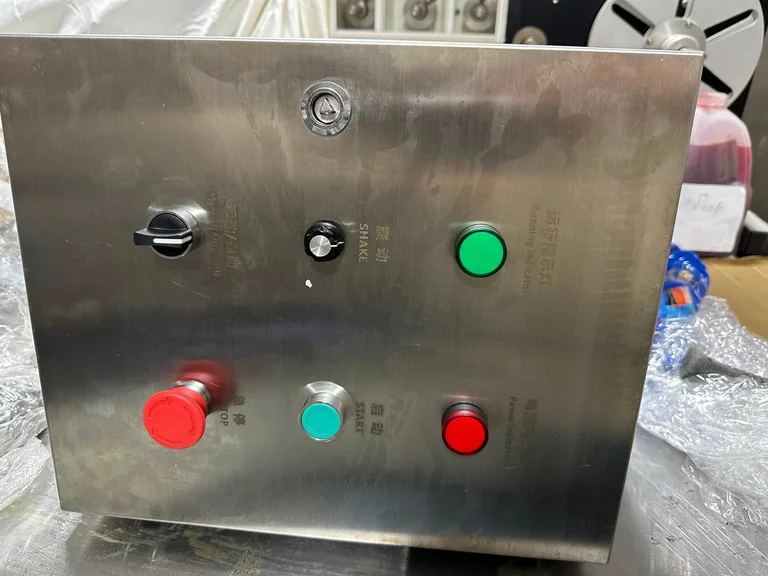
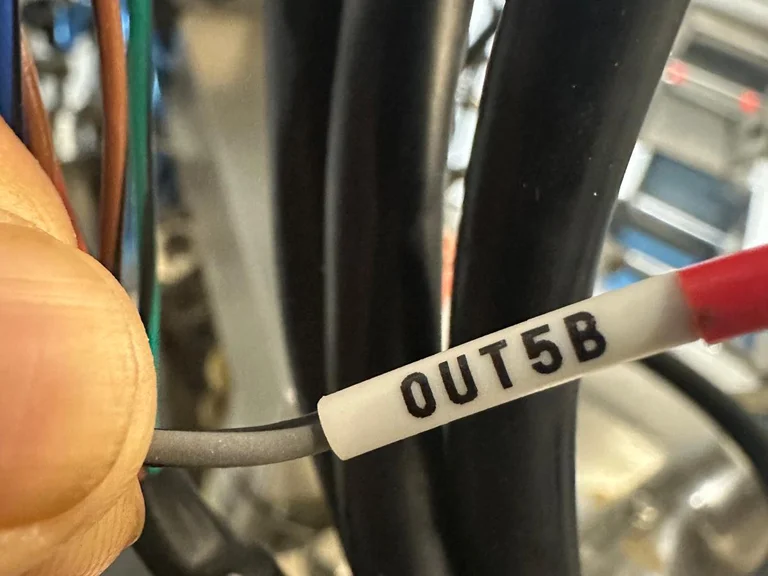
Connection points. The customer sent photos of cable ends and a control box: where does each one go? On 23 September 2026 we sent installation videos for the Z elevator, weigher, feeder and platform. On 30 September 2026 we sent the wiring. The weigher links to the Z elevator on OUT1A and OUT1B. It links to the main machine on OUT4A, OUT4B, IN1A and IN1B. Its power comes from a socket on the main machine.
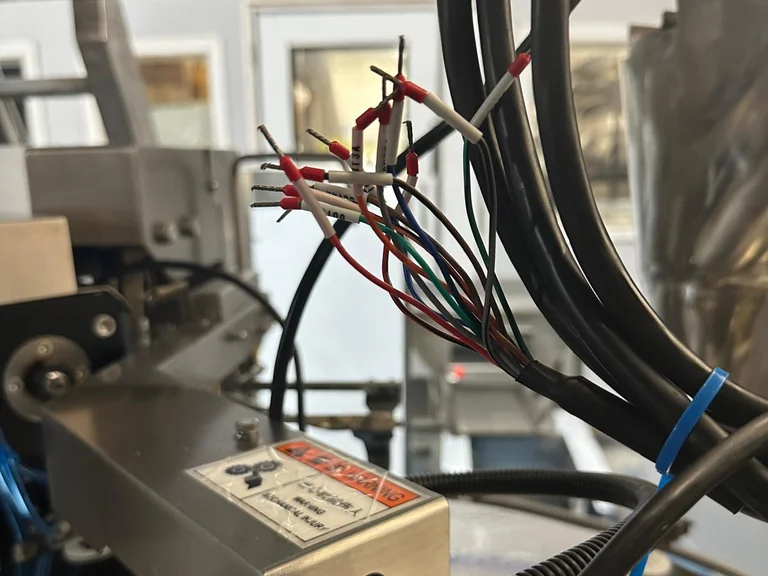
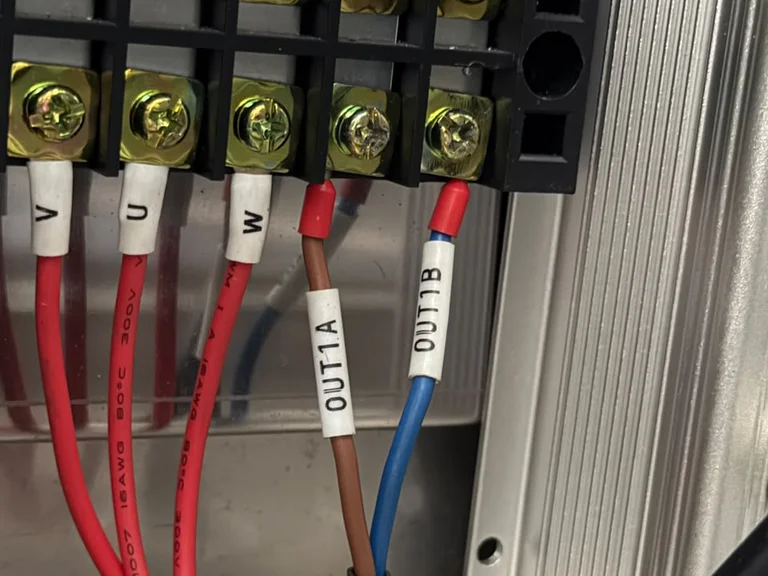
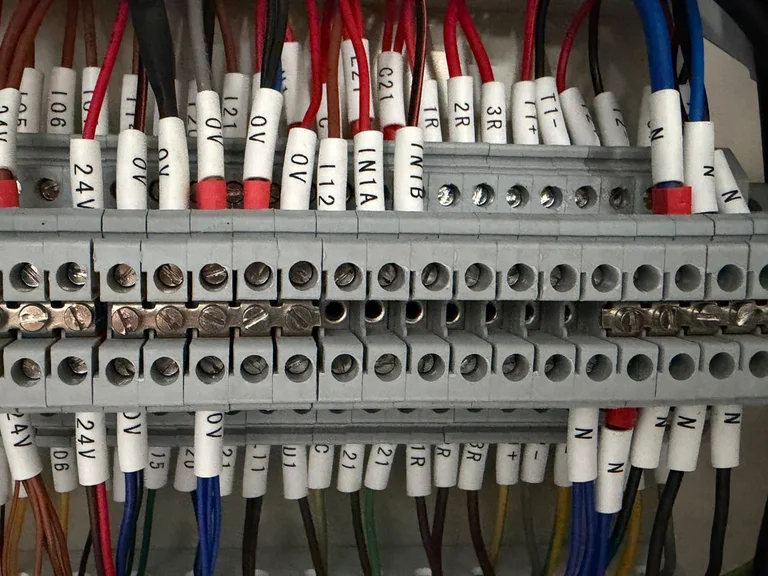
Power. The customer asked whether the Z elevator's box needs its own supply. Its electrician asked for voltage, current, frequency and power for each machine. On 2 October 2026 and 3 October 2026 we confirmed three-phase for the SW-D200 and 220 V single phase, 60 Hz for the small machine.
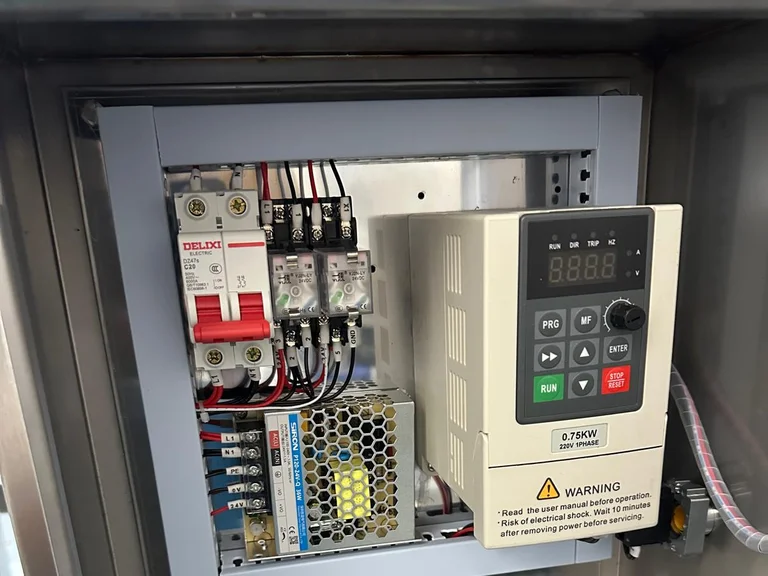
On 3 October 2026 the customer wrote: “Small machine hooked okay”.
What We Confirm Before Shipment
Installation does not end when the cases arrive. Before a machine leaves our factory, our engineer and the customer's engineer confirm three things: the power supply (phases, voltage, frequency and breaker size), the connection points on each machine, and the order of installation.
Commercial Terms
- Transport: door to door through our forwarder, as on the first order. The customer unloads at its site.
- Payment: balance paid by bank transfer before shipment.
- Packing: five wooden cases.
- Warranty: 2 years. In-warranty parts are free, wear parts excluded. Remote support is lifetime.
Status
Delivered. The cases were opened at the customer's site on 22 September 2026. The small machine was connected on 3 October 2026. No running result is recorded for the SW-D200.
What We Would Check First on a Similar Project
I would settle three things before the cases leave.
What power does your site have? Give the phases, voltage, frequency and breaker for each machine. This order changed from 50 Hz to 60 Hz in production.
Where does each cable land? Ask for the terminal labels of each link between weigher, Z elevator and pouch machine, and check the cable markers against them when you unpack.
In what order does it go together? Get the installation order and videos before the ship arrives, and plan who unloads. Here it was the customer.
Another premade pouch order we followed through to delivery is our UK Case Study: SW-L200 Powder Packing in Zipper Pouches. More orders are on our case studies page.
Frequently Asked Questions
Does this line need compressed air?
The SW-D200 does; the small powder machine does not. For this order we recommended an air compressor with its own tank. The size depends on the line, so ask us for the figure for your set-up.
Why was the order changed from 50 Hz to 60 Hz?
The customer confirmed on 25 May 2026 that power at its site is mostly 60 Hz. Part of the order had been set up for 50 Hz, so we changed it during production, which delayed the build a little.
What does the small powder machine pack?
Powder from 3 g to 60 g per sachet, dosed by a small central screw, from film rolls at least 3.125 in (about 79 mm) wide. A ribbon coder prints the lot number. It runs on 220 V single phase, 60 Hz.
Send Us Your Product, Pouch Size and Site Power
Tell us the product, the pouch size, the fill weight and the power at your site: phases, voltage and frequency. We will come back with the machine that fits, the lead time, the payment terms and the wiring notes for your order.
info@shengweimachine.com · or contact our engineering team directly

International Sales Manager · ShengWei Machine
Technical review: WeiHuang Wu, Chief Engineer